

How long does Invisalign take? For most family members, a realistic timeline falls between 12 and 18 months, though mild cases can wrap up in as little as 6 months. You wear clear aligners 20 to 22 hours per day and swap them out every 1 to 2 weeks. The exact length depends on how complex your case is and how consistently you wear them.
At Manhattan Family Orthodontics, our board-certified orthodontist and our team have been creating smiles that last for life for more than 50 years, so we’ve seen how much timelines vary from person to person. A quick cosmetic correction on a few front teeth is a very different situation than aligning a full bite. Both are possible with Invisalign clear aligners, but they call for different expectations.
Here’s the short version of what shapes your timeline:
- Mild spacing or crowding: roughly 6 months
- Moderate alignment and minor bite work: 12 to 18 months
- More involved cases: 18 months or longer, sometimes with refinements
The best way to get a realistic estimate for your smile is a free consult with our doctors, who will scan your teeth and build a personalized treatment plan based on your specific goals.
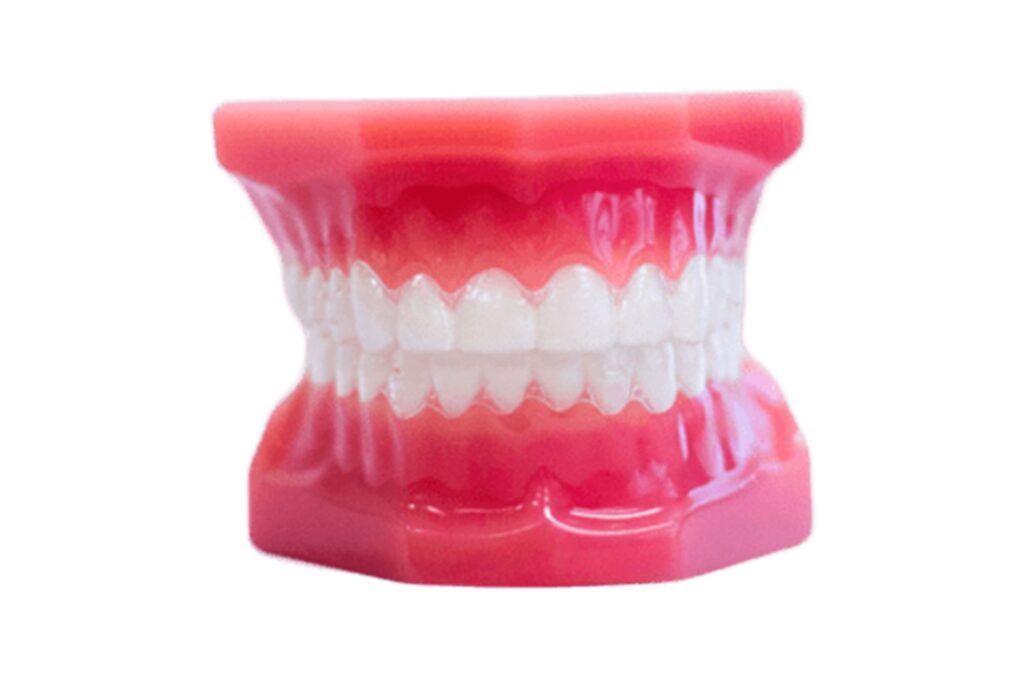
Month-by-Month: What to Expect With Invisalign
Invisalign treatment follows a predictable arc. Expect a planning visit at month zero, your first trays around month one, visible movement by months two and three, mid-treatment tracking checks near month six, then steady progress through month 18, and finally retainers to hold everything in place. Knowing this rhythm helps you stay motivated and on track.
What Happens During Your First Consult and Planning Visit?
Your first visit includes a full exam, digital scans, and photos. Our team maps your teeth in 3D and builds a personalized treatment plan that shows how your smile will shift week by week.
What Should You Expect During the First Month of Aligners?
You’ll receive your first several trays. The first few days feel a little snug, and mild pressure is normal. Most family members adjust within a week and settle into the routine of switching trays on schedule.
When Does Early Tooth Movement Become Visible?
By months two and three, small shifts start showing up in the mirror. Front teeth often move first because they have single roots, which respond quickly to gentle pressure. Plan to come in every 6 to 8 weeks for a quick progress check.
What Are Mid-Treatment Adjustments Like?
Around months four through six, our doctors check spacing, bite, and tracking. If a tooth isn’t moving exactly as planned, we may adjust your trays or add small tooth-colored attachments to guide movement. This is a good stopping point for mild cosmetic cases.
How Does Progress Continue Toward the Finish Line?
Moderate cases spend most of their treatment between months six and 18. Each new tray builds on the last, and bigger changes appear every month or two. Compliance really matters during this stretch, since skipping wear time slows everything down.
How Do You Protect Your New Smile After Treatment?
Once active treatment ends, retainers keep your teeth in their new positions. Retention is a lifelong habit, but nightly wear is usually enough after the first year.
Why Invisalign Can Be Faster (and More Comfortable)
Invisalign clear aligners have some real advantages when it comes to convenience and, in the right cases, speed.
- Removable trays: you eat normally and brush and floss like always
- Fewer emergency visits: no broken brackets or poking wires
- Predictable planning: digital 3D mapping shows every movement before treatment starts
- Efficient check-ins: shorter visits, and some progress can be reviewed virtually
Because our doctors plan every stage digitally, the path is mapped tooth by tooth from day one. You see the projected finish before you even start, which helps set clear expectations. Being able to pop trays out for a coffee meeting or a workout keeps orthodontics from disrupting your daily life, whether you’re heading to work or picking up the kids.
Comfort matters too. Smooth plastic trays don’t irritate cheeks and lips the way metal hardware sometimes can, and pressure is applied gradually with each new set. There’s also less time spent in the chair, since digital tracking means quicker check-ins and fewer manual adjustments. It’s easy, expert orthodontics designed to fit your schedule and keep treatment moving on plan.
Invisalign vs. Braces: Which Is Faster?
The honest answer is: it depends on your case. Here’s a side-by-side comparison for common situations.
| Factor | Invisalign Clear Aligners | Traditional Braces |
|---|---|---|
| Average timeline | 12-18 months | 18-24 months |
| Mild cases | As short as 6 months | 9-12 months |
| Complex cases | May need refinements | Often more efficient |
| Compliance impact | High (must wear 20-22 hrs) | Lower (fixed to teeth) |
| Comfort | Smooth plastic, removable | Modern brackets, low-profile |
| Visibility | Nearly invisible | Blends with teeth |
For straightforward alignment, Invisalign often finishes faster because movements are planned precisely from the start. For severe crowding, significant bite correction, or rotations of certain teeth, braces sometimes have the edge because they work continuously without depending on wear time.
Compliance is the deciding factor for many family members. Aligners only work when they’re in your mouth. If you tend to forget or find yourself leaving them out for hours, braces may deliver a more predictable timeline. Our doctors will guide you through both options during your free consult and recommend the approach that fits your goals, lifestyle, and case complexity.
What Affects Your Invisalign Timeline
Several factors influence how quickly Invisalign works for you. Understanding them upfront helps you plan realistically and know what to expect at each stage.
- Case complexity. Crowding, spacing gaps, crossbites, overbites, and underbites all add time. A single rotated tooth is faster to fix than a full arch of crowding.
- Wear compliance. Aligners need 20 to 22 hours a day. Consistently wearing them fewer hours slows tooth movement and can require extra trays.
- Age and bone density. Teen bone remodels quickly, while adult bone responds a little more slowly. Both groups do well with clear aligners, but adult timelines can run slightly longer.
- Refinements. Many cases finish with a short round of refinement trays to fine-tune the final result. This is normal and factored into most treatment estimates.
- Check-in attendance. Regular visits let our team catch tracking issues early. Missed visits can delay adjustments and extend treatment.
Your habits carry the most weight. Family members who commit to full wear time and keep their visits usually finish on schedule or ahead of it. The American Association of Orthodontists notes that wearing aligners consistently, for the recommended hours each day, is directly tied to staying on track for on-time results.
Is Invisalign Right for Your Timeline and Case?
Invisalign handles a wide range of situations, but it isn’t the right fit for every smile. Here’s a quick candidacy snapshot:
- Great fit: mild to moderate crowding, spacing, minor bite issues, cosmetic front-tooth alignment
- Possible fit with planning: moderate bite correction, rotations, deeper overbites
- Better suited to braces: severe crowding, significant skeletal bite problems, complex multi-tooth rotations
Teens and adults alike are common candidates, and we treat family members across every age at Manhattan Family Orthodontics. The non-negotiable is commitment to 20 to 22 hours of daily wear. If that fits your lifestyle, clear aligners can deliver a smile that lasts a lifetime with minimal disruption to your day.
Should your case be more involved, our doctors may recommend LightForce clear braces or InSmile lingual braces as strong alternatives that keep your smile looking natural during treatment.
Frequently Asked Questions About Invisalign Timelines
How long does Invisalign take on average?
Most family members complete Invisalign treatment in 12 to 18 months. Mild cases can finish in as little as 6 months, while more involved cases may run 18 months or longer. Your exact timeline depends on case complexity, wear compliance, and whether refinements are needed at the end.
Can Invisalign work in 6 months?
Yes, for minor corrections. Small spacing issues, mild crowding, and cosmetic front-tooth alignment often finish in about 6 months. This is sometimes called a limited or express case. During your free consult, our doctors can tell you whether a shorter timeline is realistic for your smile.
How long do I wear aligners each day?
Plan to wear your aligners 20 to 22 hours per day, every day. That leaves 2 to 4 hours for eating, brushing, and flossing. Wearing them less slows tooth movement and can extend your total treatment time or require additional trays.
Does Invisalign take longer than braces?
Not usually. For mild to moderate cases, Invisalign is often as fast as or faster than braces, averaging 12 to 18 months versus 18 to 24 months. Complex cases sometimes favor braces because they work continuously without relying on patient compliance.
What happens after treatment ends?
You’ll transition into retainers, which hold your teeth in their new positions. Full-time wear is typical for the first few months, then nightly wear long term. Retention is a lifelong commitment, and skipping it is the most common reason smiles shift back over the years.
Ready for a clear answer about your own timeline? Our team is led by board-certified orthodontist Dr. Daniel Popper, working alongside Dr. Kris Togias, DMD, Dr. Olivier Nicolay, DDS, MMSC, Dr. Kathrin Praedikow, DDS, PhD, and Dr. Mia Karam, DDS. Together they bring international training and decades of combined experience to every case. Both of our office locations welcome family members of all ages for a free consult, where we’ll scan your teeth, build your personalized treatment plan, and show you what your smile could look like at the finish line. Your smile, our passion.