

Braces vs. Invisalign is one of the biggest decisions you’ll make when starting orthodontic treatment. Both straighten teeth beautifully, but they work differently, look different, and fit different lifestyles. At Manhattan Family Orthodontics, our board-certified orthodontists help family members weigh the pros and cons of each so you can pick the right option with confidence. So how do you tell which one truly matches your smile goals? Let’s break it down.
 What Are Braces and Invisalign?
Braces are fixed brackets and wires bonded to your teeth that apply steady pressure to shift them into place. Clear aligners like Invisalign are removable, custom trays worn over your teeth that gradually straighten your smile. Both correct crowding, spacing, and bite issues for children, teens, and adults, and both are prescribed by our board-certified orthodontists.
Traditional metal braces have come a long way. Modern brackets are smaller, smoother, and more comfortable than the versions your parents may remember. Wires are engineered to move teeth efficiently with fewer adjustments.
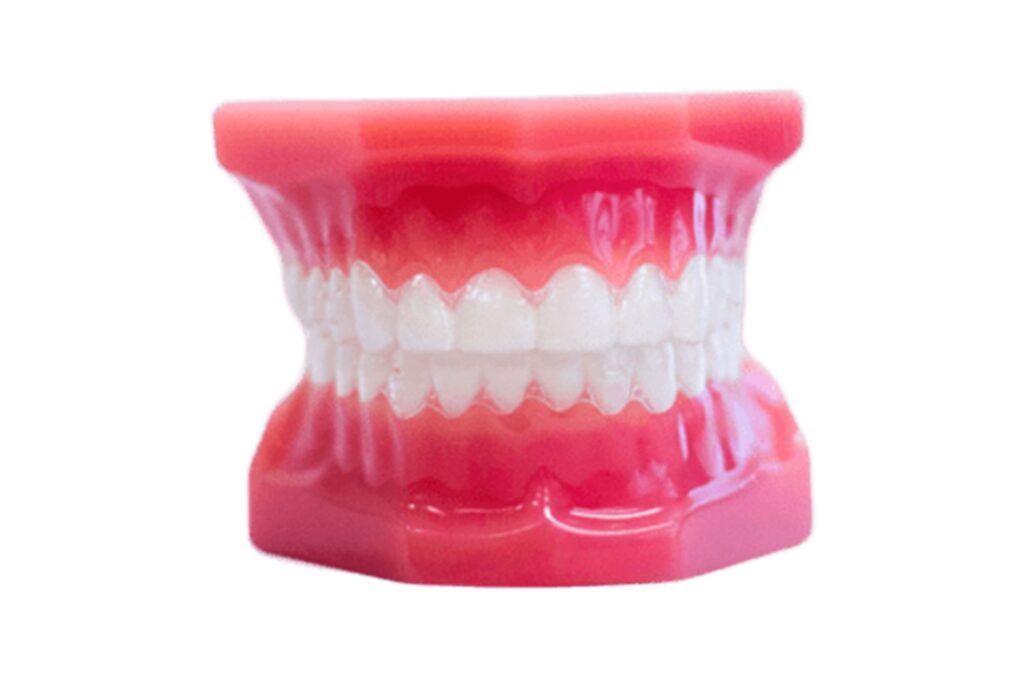
Clear aligners use a set of custom-made trays crafted from smooth, medical-grade plastic. You swap trays on a schedule, and each new set moves your teeth a little closer to the final result.
At Manhattan Family Orthodontics, our doctors offer both options. Whether you’re 9 or 59, we’ll walk you through both so you can see which one fits your smile, your schedule, and your budget.
How Do Braces and Invisalign Work?
Braces work through continuous, gentle pressure. Brackets bond to each tooth, a wire connects them, and periodic adjustments guide teeth into their new positions. Clear aligners use a staged sequence of trays worn 20 to 22 hours a day. You switch to a new tray roughly every one to two weeks, and each tray moves your teeth a fraction closer to the finished result.
Both treatments typically take 12 to 24 months, depending on the complexity of your case.
Here’s how each option progresses:
- Digital scan and 3D planning. Our team maps your teeth with advanced 3D scanning to create your personalized treatment plan.
- Appliance placement or delivery. Brackets are bonded to your teeth, or your first set of aligners is fitted.
- Progress visits. Braces need adjustments every 4 to 8 weeks. Aligner wearers pick up new trays and check in less often.
- Refinement and finishing. Small tweaks make sure every tooth lands where it should.
- Retainers. After active treatment, retainers protect your new smile for the long term.
The technology behind both treatments has improved a lot. Digital scans replace goopy impressions, and 3D software lets you preview your finished smile before treatment even starts.
Benefits of Each Treatment Option
Each option has real strengths, and the best choice depends on how you live day to day.
What Are the Benefits of Clear Aligners?
- Nearly invisible on your teeth, ideal for adults and teens who want a discreet look
- Removable for meals, brushing, and flossing
- Fewer food restrictions since you take trays out to eat
- Often requires fewer in-office visits
- Comfortable, smooth plastic with no brackets or wires to irritate cheeks
Because the trays lift right out, cleaning your teeth stays simple, and there’s no juggling special brushes around brackets. Many family members in New York, NY choose aligners for exactly this reason, they blend into a busy adult schedule without drawing attention at work or social events.
What Are the Benefits of Traditional Braces?
- Excellent at correcting complex bites, severe crowding, and stubborn rotations
- No compliance needed, they work 24/7 because they’re fixed
- Great option for younger family members who might forget to wear trays
- Available in metal or LightForce clear braces for a more subtle look
- Predictable, proven results for decades
Both options can produce beautiful, lasting outcomes when treatment is completed properly and retainers are worn afterward. It really comes down to your case, your goals, and what fits your day-to-day life.
Braces vs. Invisalign: Side-by-Side Comparison
Sometimes it helps to see the differences laid out clearly. Here’s how the two options stack up:
| Feature | Traditional Braces | Invisalign Clear Aligners |
|---|---|---|
| Appearance | Visible brackets and wires (LightForce clear braces available) | Nearly invisible |
| Comfort | Some soreness after adjustments, possible cheek irritation | Smooth plastic, mild pressure with each new tray |
| Discipline required | Low, they stay on your teeth | High, must wear 20-22 hours daily |
| Eating | Avoid sticky, hard, and crunchy foods | No restrictions, remove trays to eat |
| Oral hygiene | Brushing and flossing take more effort | Easy, remove trays to brush and floss normally |
| Complex cases | Handles severe crowding, rotations, and bite issues well | Best for mild to moderate cases |
| Office visits | Every 4-8 weeks for adjustments | Fewer visits, longer stretches between check-ins |
| Treatment time | Typically 12-24 months | Typically 12-24 months |
| Best for | All ages, especially complex cases and younger kids | Teens and adults who want a discreet option |
Neither option is universally “better.” Both deliver excellent results when matched to the right case. During your free consult, our doctors will look at your teeth, bite, and lifestyle to recommend the option that fits you best.
How Much Do Braces and Invisalign Cost?
The cost of braces or clear aligners depends on your case complexity, how long treatment takes, and which appliance you choose. Traditional metal braces are often the most budget-friendly option. Clear aligners and premium choices like LightForce clear braces or InSmile lingual braces may cost more because of the technology and customization involved.
Several factors affect your final price:
- Case complexity. Minor crowding costs less than major bite correction.
- Treatment length. Longer cases generally cost more.
- Appliance type. Metal, clear, lingual, or aligners each carry different price points.
- Additional appliances. Expanders, retainers, or refinements may add to the total.
Many dental PPO insurance plans include orthodontic coverage. We also offer flexible payment plans so treatment fits your budget without stress. During your free consult, families across New York, NY receive a personalized cost estimate with all the numbers laid out clearly. No surprises, no pressure.
Who Is a Good Candidate for Each Option?
The right choice depends on your bite, your goals, and your daily habits. Here’s how the two options typically break down:
Clear aligners are a great fit if you:
- Have mild to moderate crowding or spacing
- Want a discreet, nearly invisible option
- Can commit to wearing trays 20 to 22 hours a day
- Prefer fewer in-office visits
- Are a teen or adult who values flexibility
Braces are a great fit when you:
- Have complex crowding, severe rotations, or significant bite issues
- Want a fix-it-and-forget-it option with no compliance required
- Are a younger child or teen who might lose or forget trays
- Need precise tooth movement that fixed appliances handle best
- Prefer a predictable, proven approach
There’s no age limit on a healthy smile. Teens, adults, and even older family members in New York, NY can benefit from either treatment. The only way to know for sure which option suits you is with a professional evaluation. Our doctors will examine your teeth, discuss your goals, and recommend the treatment that gets you there with the least fuss.
Frequently Asked Questions
Which is faster, braces or Invisalign?
Both treatments typically take 12 to 24 months, and speed depends more on your case than the appliance itself. Simple cases may finish in under a year, while complex cases take longer. Clear aligners can move quickly when worn consistently, and braces work steadily around the clock because they’re always on.
Is Invisalign more expensive than braces?
Clear aligners often cost slightly more than traditional metal braces because of the custom aligner technology, but pricing varies by case. LightForce clear braces and InSmile lingual braces are also premium options. Many dental PPO insurance plans cover both, and we offer flexible payment plans to fit your budget.
Does Invisalign work as well as braces?
For mild to moderate cases, yes. Clear aligners deliver results comparable to braces when you wear the trays 20 to 22 hours a day. For complex cases involving severe crowding, significant rotations, or major bite correction, braces are often the more predictable choice. Our doctors will help you decide.
Can I switch from braces to Invisalign mid-treatment?
In some cases, yes. If your treatment plan and progress allow it, switching is possible, but it depends on where you are in your treatment. Talk to our doctors before making any changes. They’ll look at your case and let you know if a switch makes sense.
Braces vs. Invisalign: how do I decide which is right for me?
The best way is a free consult with a board-certified orthodontist. Our doctors will examine your teeth, review your bite, discuss your lifestyle, and walk you through both options with clear pros and cons. You’ll leave knowing exactly what treatment fits your goals.
Ready to Find Your Perfect Fit?
Choosing between braces and clear aligners is easier when you have an expert in your corner. At Manhattan Family Orthodontics, our team, led by Dr. Kris Togias, DMD, and board-certified orthodontist Dr. Daniel Popper, DMD, brings international training and decades of combined experience to every family we treat. Our doctors trained at institutions including the University of Rochester, Université Paris 5 René Descartes, and the University of Cologne, and our team is fluent in seven languages so your family feels right at home.
Our team welcomes children, teens, and adults ready to start creating smiles that last for life. Book your free consult today and let’s find the option that fits your smile, your schedule, and your budget.
Your smile, our passion.