

Choosing orthodontic treatment as an adult or image-conscious teen often comes down to one question: how visible will the braces be? If you’ve looked into clear aligners and traditional metal brackets but still want something more discreet, lingual braces might be the answer. These hidden braces sit behind your teeth, giving you the precision of fixed brackets with none of the visible hardware. Here’s what to know about braces behind the teeth before you book a free consult.
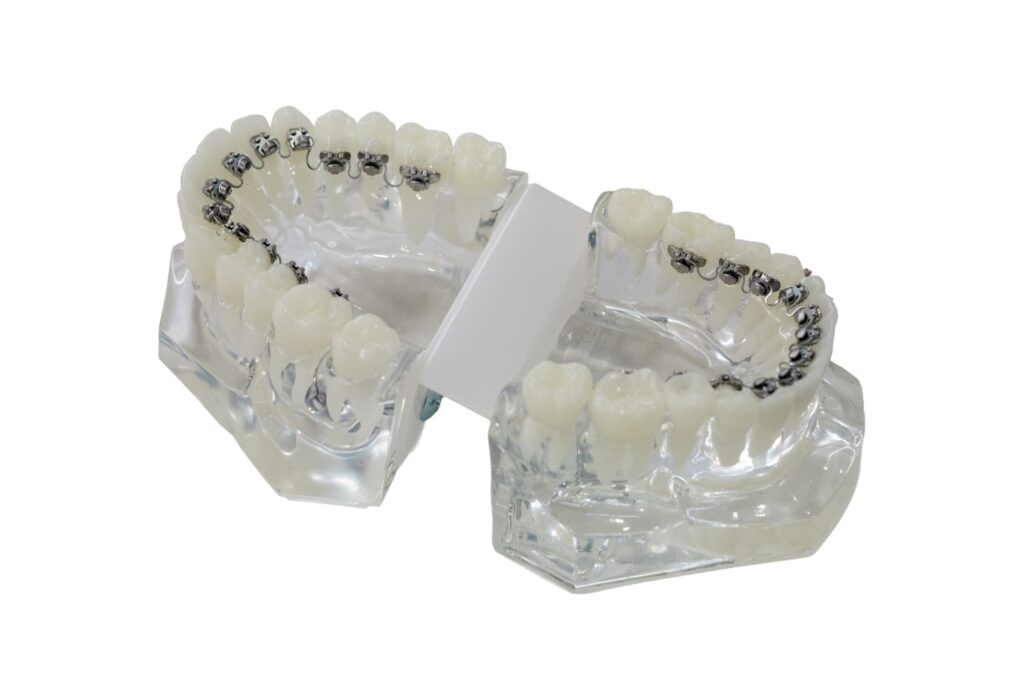
What Are Lingual Braces?
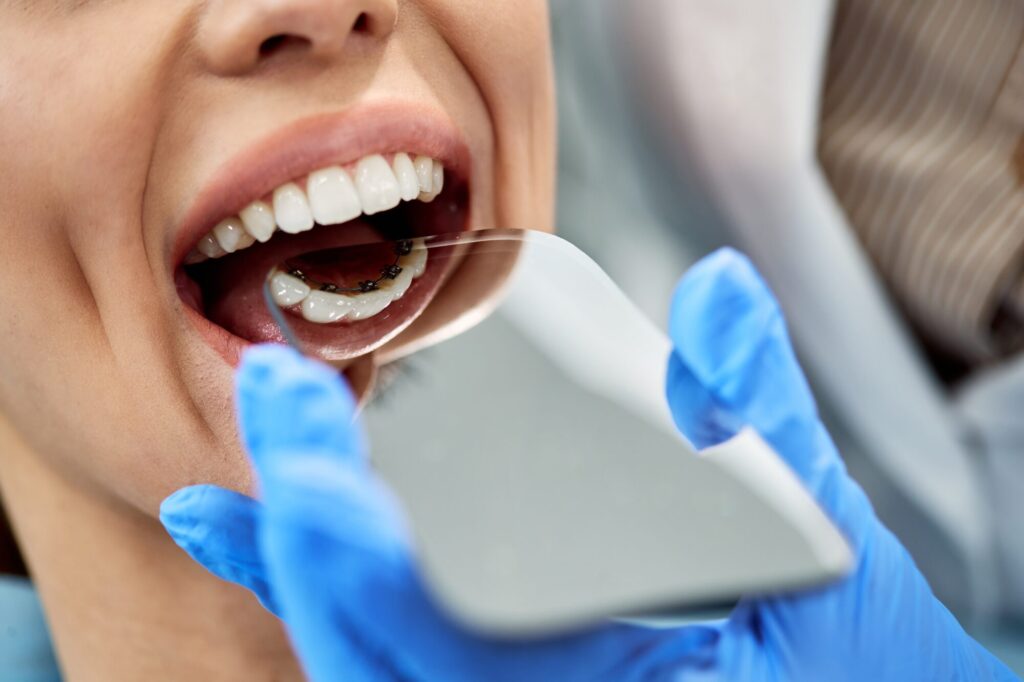
Lingual braces are fixed brackets and wires bonded to the tongue-side (back) surface of your teeth, making them completely invisible from the front. They work the same way traditional braces do, applying continuous pressure to shift teeth into their ideal positions, but because they’re placed on the inside, nobody sees them when you smile, speak or laugh.
You might also hear them called hidden braces, inside braces or braces behind the teeth. All these terms describe the same treatment approach.
What sets modern lingual braces apart is the custom fabrication process. Each bracket is designed using CAD/CAM technology to match the unique contour of each tooth, which improves both fit and comfort. At Manhattan Family Orthodontics, our orthodontists offer InSmile lingual braces, a custom system built for patients who want effective treatment without changing how they look during the process.
How Lingual Braces Work: The Treatment Process
Lingual braces move teeth using the same biomechanical principles as traditional braces. A custom archwire threads through brackets bonded to the back of your teeth, applying steady, controlled force that gradually guides each tooth into position. The difference is placement, not function.
Here’s what the treatment process typically looks like at Manhattan Family Orthodontics:
- Free consult and 3D digital scans. Our orthodontists examine your teeth, review your goals and capture detailed 3D scans of your bite. No messy impressions needed.
- Custom bracket fabrication. Your scans are sent to InSmile, where each bracket is designed and made to fit the exact shape of your individual teeth.
- Bonding your brackets. Dr. Kris Togias bonds your custom brackets to the back of your teeth during an in-office visit. From the outside, your smile looks just as it did before.
- Archwire activation. Once the brackets are in place, we attach the archwire, which begins applying gentle, continuous pressure to start moving your teeth.
- Regular adjustment visits. You’ll come in for quick check-ins so we can swap wires, monitor progress and make fine adjustments.
- Treatment length of 12 to 30 months. Most cases finish within this range, though complex bites may take longer.
After active treatment, you’ll wear retainers to keep your new smile stable for life.
Benefits of Braces Behind the Teeth
Lingual braces bring together a few advantages that are hard to find in one treatment. If discretion is your top priority but you also want the control of fixed appliances, here’s why braces behind the teeth might be the right fit:
- Truly invisible from the front. Unlike clear aligners, which can catch the light, or clear brackets, which still sit on the front of your teeth, lingual braces are hidden on the tongue side. Even people standing inches from your face won’t notice them.
- No compliance required. Clear aligners only work if you wear them 20 to 22 hours a day. Lingual braces work around the clock without any effort on your part. You can’t forget to put them back in because they never come out.
- Precise control for complex cases. Fixed brackets give orthodontists direct, three-dimensional control, which makes lingual braces a strong choice for tricky movements like rotations and closing spaces after extractions.
- Lower risk of white spots on visible surfaces. If plaque builds up around brackets during treatment, it can leave faint white marks called decalcification. With lingual braces, any marks would form on the back of the teeth, not on the front where they’d show in your smile.
- Front teeth stay clear for musicians. If you play a wind or brass instrument, having brackets on the back of your teeth rather than the front can make a real difference in comfort and playability.
- Custom-fit brackets improve comfort. Because each bracket is made for a specific tooth, there’s less bulk and a better fit than with older lingual systems.
For adults in professional roles, public-facing careers or anyone who simply doesn’t want braces to be part of how others see them, these benefits add up quickly.
Lingual Braces vs. Clear Aligners vs. Traditional Braces
Each treatment option has strengths and trade-offs. This side-by-side comparison shows where lingual braces fit:
| Feature | Lingual Braces (InSmile) | Clear Aligners | Traditional Metal Braces |
|---|---|---|---|
| Visibility | Fully hidden behind teeth | Nearly invisible, slight gloss visible | Most visible option |
| Compliance | Fixed, works 24/7 | Worn 20 to 22 hours a day | Fixed, works 24/7 |
| Case complexity | Excellent for complex cases | Best for mild to moderate cases | Excellent for all cases |
| Comfort | Tongue adjustment period of 1 to 2 weeks | Smoothest, minimal irritation | Cheek and lip adjustment period |
| Hygiene | Requires extra tools and attention | Easiest, remove to brush and floss | Requires floss threaders or water flosser |
The right choice depends on your case, your lifestyle and your priorities. Someone with a mild spacing issue who travels often might love clear aligners. A patient with significant rotations who doesn’t want to think about compliance may be a better fit for lingual braces. Our orthodontists will walk you through all the options during your free consult.
What Affects the Cost of Lingual Braces?
Lingual braces usually cost more than traditional metal braces or clear aligners. The difference comes from the custom design and fabrication of every bracket, along with the specialized training it takes to place and manage braces on the back of the teeth.
A few things shape your final cost:
- Case complexity. Simple alignment corrections take less work than full bite corrections involving extractions or jaw alignment.
- Treatment length. Longer treatment means more adjustment visits and archwires.
Insurance can help. Manhattan Family Orthodontics accepts all dental PPO plans, and our team will run a benefits check to help you get the most from your coverage. We also offer in-office payment plans with zero interest and no credit check, and we accept FSA and HSA cards.
During your free consult, our team will review your case, verify your insurance benefits and build a personalized treatment plan with a clear picture of your costs.
Who Is a Good Candidate for Lingual Braces?
Lingual braces work well for many people, but they’re not the right fit for everyone. You might be a good candidate if:
- You’re an adult or older teen seeking discreet treatment. Whether for professional reasons, a public-facing career or personal preference, lingual braces work well when visibility matters.
- You have moderate to complex orthodontic needs. Crowding, spacing, rotations and bite issues all respond well to fixed lingual appliances.
- You don’t want to rely on compliance. If you know yourself well enough to admit that wearing aligners 22 hours a day won’t happen, fixed braces remove that variable.
- Your teeth have enough surface area for brackets. Average-sized and larger teeth hold lingual brackets reliably.
- You’re committed to thorough oral hygiene. Cleaning behind your teeth takes extra effort and the right tools.
Lingual braces may not be the best choice if you have a severe deep overbite, very small teeth or active gum disease that needs to be addressed first. Our orthodontists will do a complete evaluation during your consult to confirm whether lingual braces are right for your smile.
Frequently Asked Questions About Lingual Braces
Are lingual braces really invisible?
Yes. Because the brackets and wires are bonded to the tongue-side surface of your teeth, they’re hidden from every front-facing angle. Even close up, in photos or on video calls, people won’t see them when you smile or speak. This is why they’re often called invisible braces or hidden braces.
Do lingual braces affect speech?
Most patients notice a slight lisp during the first one to two weeks as the tongue adjusts to the brackets. Practicing by reading aloud or having longer conversations helps your tongue adapt quickly. By the end of the adjustment period, most people speak normally with no noticeable difference.
Are lingual braces more painful than traditional braces?
The tooth-moving pressure is similar to traditional braces, so the soreness after adjustments feels about the same. The main difference is a brief adjustment period while your tongue gets used to the new texture. Orthodontic wax and warm salt water rinses can ease discomfort during the first couple of weeks.
How long does treatment with lingual braces take?
Most lingual braces treatment takes 12 to 30 months, depending on how complex your case is. Mild alignment issues may finish on the shorter end, while bite corrections and more significant tooth movements take longer. Our orthodontists will give you a personalized timeline at your free consult.
Can lingual braces fix an overbite?
Yes, lingual braces can correct mild to moderate overbites effectively. For very deep overbites, additional appliances or a different treatment approach may be recommended. Your orthodontist will evaluate your bite during the consult and let you know what’s possible.
Ready to Learn More About InSmile Lingual Braces?
If you’re ready to explore whether braces behind the teeth are right for you, Manhattan Family Orthodontics is here to help. For more than 50 years, our orthodontists have been creating smiles that last for life, personalizing every part of treatment to match each family member’s goals. Our team is fluent in seven languages, and we welcome you at either of our two Manhattan locations:
- Uptown Office: 207 E. 63rd St., New York, NY. Call 212-207-8028.
- Downtown Office: 11 Fifth Ave., Ste. C, New York, NY. Call 212-477-3871.
Book your free consult today and find out if InSmile lingual braces are the right path to the smile of your dreams.