
Picking the right orthodontist in NYC comes down to matching your goals with a provider’s training, technology, and approach. With many specialists across Manhattan and the greater New York area offering different treatments and philosophies, the choice deserves careful thought.
This guide breaks down what you need to know about choosing an orthodontist in NYC. You’ll learn what sets orthodontic specialists apart, what treatment options are available, what affects cost, and who makes a good candidate for treatment. For yourself, your teen, or a younger child, the right fit depends on your goals, age, and budget. The best providers combine board certification, modern technology, and a family-focused approach to support results that hold up over time.
What Is an Orthodontist?
An orthodontist is a dental specialist who completes two to three years of advanced training after dental school, focused on tooth alignment, bite correction, and jaw development. They treat children, teens, and adults using braces, aligners, and related appliances. Many hold board certification through the American Board of Orthodontics (ABO) and active membership with the American Association of Orthodontists (AAO).
The American Dental Association recognizes orthodontics as a formal dental specialty.
So what’s the difference between an orthodontist and a general dentist who offers aligners? Training and focus. While general dentists receive broad education covering all aspects of oral health, orthodontists dedicate their entire practice to moving teeth and correcting bites. They handle everything from mild crowding to complex jaw discrepancies.
This specialized training matters when treatment gets complicated. Orthodontists understand how teeth, bones, and muscles work together. They can predict how your bite will change over time and adjust treatment accordingly. Many are also certified by the American Board of Orthodontics, meaning they’ve passed rigorous written and clinical exams beyond their specialty residency.
Orthodontists treat family members of all ages. Children as young as seven benefit from early evaluations. Teens often start full treatment during their growth spurts. Adults make up a growing portion of orthodontic family members as well. There’s no upper age limit for a healthier smile.
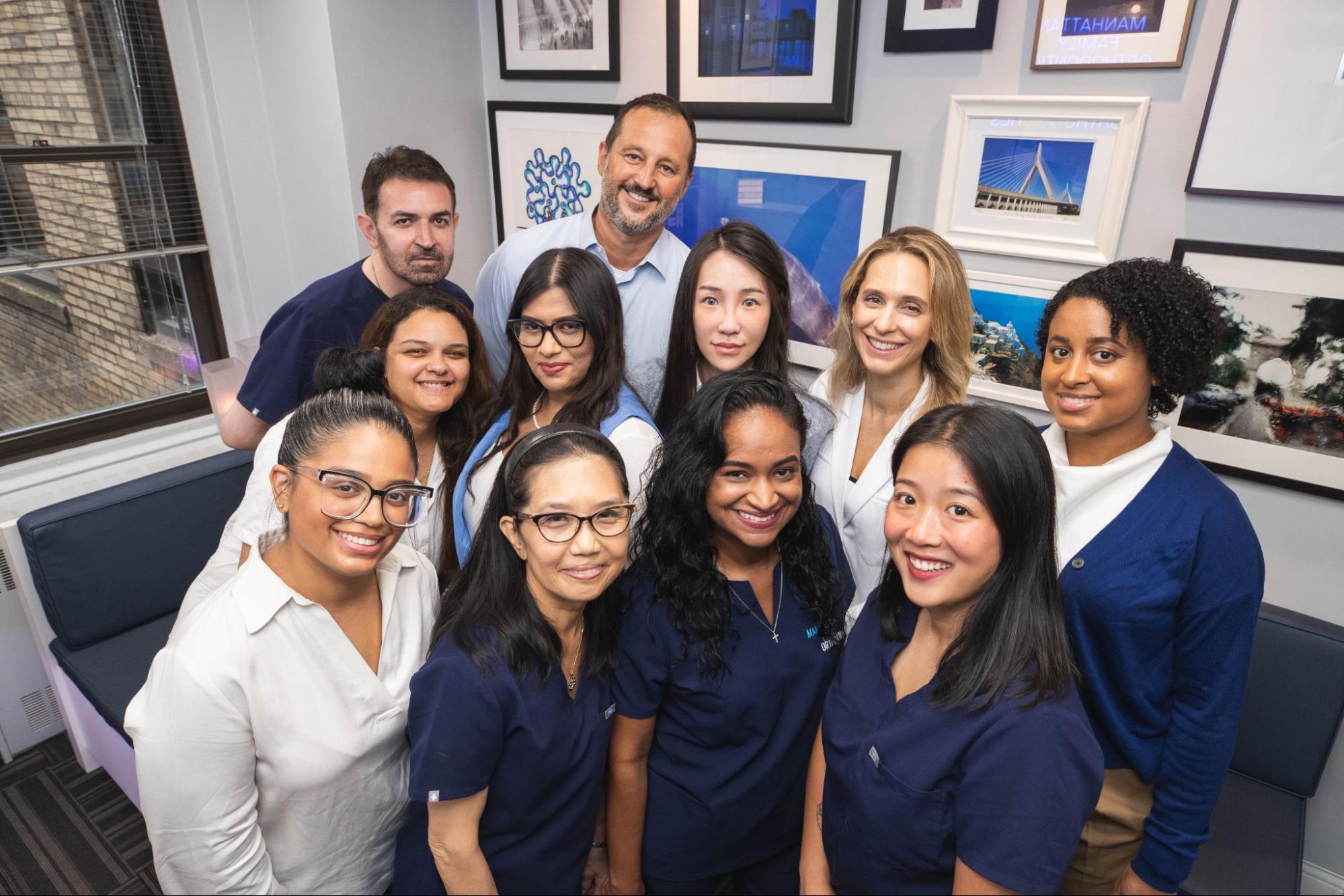
At specialty practices like Manhattan Family Orthodontics, board-certified orthodontists draw on advanced training and years of clinical experience to plan each case carefully. Learn more about what to expect during your free consult before scheduling.
How Orthodontic Treatment Works
Orthodontic treatment follows a predictable path from your first visit through your final retainer check. Here’s what to expect:
Step 1: Initial Consultation
Your first visit includes a thorough exam, digital scans of your teeth, and X-rays. The orthodontist evaluates your bite, tooth positions, and jaw alignment. Many NYC practices offer a free consultation, giving you a chance to ask questions and understand your options without financial commitment.
Step 2: Personalized Treatment Plan
Based on your diagnosis and goals, your orthodontist creates a personalized treatment plan. This includes the recommended approach (braces, aligners, or another option), estimated timeline, and cost breakdown. You’ll see projections of how your teeth will move throughout treatment.
Step 3: Active Treatment
Treatment begins with the placement of braces or delivery of your first aligners. Active treatment typically lasts anywhere from six to twenty-four months, depending on case complexity. Your orthodontist monitors progress and makes adjustments along the way.
Step 4: Regular Adjustments
You’ll visit your orthodontist every four to eight weeks for adjustments. With braces, this means tightening wires or changing elastics. With aligners, you’ll receive new trays and have your progress checked. These visits are usually quick, often under thirty minutes.
Step 5: Retention Phase
Once your teeth reach their final positions, you’ll wear retainers to keep them there. This phase is just as important as active treatment. Most family members wear retainers full-time initially, then transition to nighttime wear. Your orthodontist will explain exactly what retention looks like for your case.
Benefits of Seeing an Orthodontic Specialist
Why see a specialist instead of a general dentist or direct-to-consumer aligner company? The advantages go beyond credentials.
Specialized Expertise Matters
Orthodontists handle complex cases every day. Severe crowding, significant bite issues, and jaw discrepancies call for specialized knowledge. Orthodontists certified by the American Board of Orthodontics have seen thousands of cases similar to yours and know how to get predictable results. That depth of experience translates to better planning, fewer surprises, and outcomes that hold up over time.
What Technology Do Specialists Use?
Specialty offices typically use tools that general dental offices don’t carry. This includes 3D-printed custom braces, lingual systems that hide behind your teeth, and digital scanning that eliminates messy impressions. You can read more about LightForce clear braces and InSmile lingual braces to see how these systems work.
Long-Term Oral Health Gains
Straight teeth aren’t just about appearance. Properly aligned teeth are easier to clean, which means fewer cavities and healthier gums. A corrected bite reduces abnormal wear on tooth enamel and can ease jaw tension or TMJ discomfort. Many family members notice the everyday differences within months.
A Confidence Boost That Sticks
A smile you’re proud of changes how you carry yourself. Many family members report feeling more confident in professional and social situations after treatment. That boost in self-assurance often sticks with people for years.
Are There Options for Every Lifestyle?
Some family members want discretion; others need powerful correction. Orthodontists offer treatments that fit every situation. Athletes, musicians, and professionals across NYC with public-facing roles all have approaches that work for them.
Comparing Treatment Options
Orthodontists typically offer several treatment types. Knowing the differences helps you have a more productive conversation at your free consult.
What Are Metal Braces?
Traditional metal braces remain the most established option for complex cases. Modern versions are smaller and more comfortable than older designs. They work around the clock and handle severe crowding, significant bite issues, and cases requiring precise tooth movement.
Best for: Complex cases, family members who want the most proven approach, those who don’t mind visible brackets.
How Do Clear Aligners Work?
Clear aligner systems use removable trays to shift teeth gradually. You change trays every one to two weeks as your teeth move. Aligners work well for mild to moderate crowding and spacing issues.
Best for: Adults and teens wanting a discreet option, those with mild to moderate alignment issues, family members who will wear them consistently.
What Are LightForce Clear Braces?
LightForce clear braces use 3D printing to create custom brackets for each tooth. The ceramic material blends with your teeth, making them less noticeable than metal. Because each bracket is designed specifically for your tooth, treatment can be more efficient.
Best for: Family members wanting the effectiveness of braces with a subtler look, complex cases where aligners aren’t ideal.
What Are InSmile Lingual Braces?
InSmile lingual braces attach to the back of your teeth, making them completely invisible from the front. They offer the power of traditional braces with total discretion.
Best for: Adults in professional settings, anyone who wants truly invisible treatment, family members whose cases require braces but who can’t have visible brackets.
The table below compares the four main treatment types across visibility, duration, ideal candidates, and whether they can be removed.
| Treatment Type | Visibility | Typical Duration | Best For | Removable |
|---|---|---|---|---|
| Metal Braces | Visible | 12-24 months | Complex cases | No |
| Clear Aligners | Nearly invisible | 6-18 months | Mild-moderate cases | Yes |
| LightForce clear braces | Subtle | 12-20 months | Moderate-complex cases | No |
| InSmile lingual braces | Invisible | 12-24 months | Any complexity | No |
Durations are typical ranges and vary based on case complexity.
What Affects the Cost of Orthodontic Treatment in NYC?
Orthodontic costs in NYC depend on five main factors: the type of treatment chosen, case complexity, provider experience and credentials, technology used in the office, and insurance coverage. Most Manhattan offices also offer payment plans that spread fees across the length of treatment, and many provide a free consultation so families understand pricing before committing.
How Does Treatment Type Affect Price?
Different systems come with different price points. Traditional metal braces often cost less than lingual braces or clear aligners. Custom options like LightForce clear braces may fall somewhere in between. Your orthodontist can explain the cost differences for your specific case.
Does Case Complexity Change the Cost?
A straightforward spacing issue takes less time and fewer visits than a severe bite problem requiring jaw correction. Longer, more involved treatments tend to carry higher fees because they require more chair time, more appointments, and more materials.
Provider Credentials and Pricing
Orthodontists with advanced training, ABO board certification, or specialized expertise may charge more than those earlier in their careers. That said, experience often translates to more efficient treatment and fewer complications. Established Manhattan practices like Manhattan Family Orthodontics build their fees around that depth of training.
What About Technology?
Offices using digital scanning, 3D treatment planning, and custom appliances put real money into their equipment. These tools often improve comfort and outcomes, and that shows up in the overall fee.
How Does Insurance Coverage Work?
Many dental PPO plans include orthodontic benefits that cover a portion of treatment. Call your insurer to confirm coverage before your free consult so you have firm numbers in hand.
Are Payment Plans Available?
Most NYC orthodontic offices offer payment plans that spread costs over the length of treatment. This makes orthodontic care accessible even when insurance coverage is limited.
A free consultation gives you the chance to understand costs upfront. You’ll receive a detailed breakdown of fees, insurance estimates, and payment options before committing to treatment. Schedule your free consult when you’re ready.
Who Is a Good Candidate for Orthodontic Treatment?
Orthodontic treatment works for family members across a wide age range. Searching for the best orthodontist in NYC starts with understanding who benefits most. Here’s what makes someone a good candidate:
Should Children Get an Early Evaluation?
The American Association of Orthodontists recommends children have their first orthodontic evaluation by age seven. At this age, orthodontists can spot developing problems and decide whether early intervention might prevent more complex treatment later.
Early treatment isn’t right for every child. Many kids simply need monitoring until more permanent teeth come in. Your orthodontist will recommend the best timing for your child’s specific situation.
Treatment During the Teen Years
The teenage years remain the most popular time for orthodontic treatment. Most permanent teeth have erupted, but the jaw is still growing. This combination makes tooth movement efficient and predictable.
Teens have options ranging from traditional braces to clear aligners, depending on their case and lifestyle. Many offices offer teen-specific aligner programs with compliance indicators and replacement policies.
Can Adults Still Get Orthodontic Treatment?
Adult orthodontic treatment has grown significantly over the past decade. There’s no upper age limit, and healthy teeth and gums are the main prerequisites. Adults across New York often appreciate discreet options like clear aligners or InSmile lingual braces that fit professional settings.
Some adults had braces as teens but experienced shifting over time. Others are addressing issues they’ve lived with for decades. Either way, treatment can deliver excellent results. Practices like Manhattan Family Orthodontics see this every day across their adult family members.
What Issues Do Orthodontists Treat?
Orthodontists correct a range of alignment and bite problems:
- Crowding: Teeth overlap or twist due to limited space
- Spacing: Gaps between teeth from missing teeth or jaw size
- Overbite: Upper front teeth extend too far over lower teeth
- Underbite: Lower teeth sit in front of upper teeth
- Crossbite: Some upper teeth close inside lower teeth
- Open bite: Front teeth don’t touch when back teeth are closed
What Prerequisites Do You Need Before Starting?
Before starting orthodontic treatment, you need healthy teeth and gums. Active cavities or gum disease must be treated first. Your orthodontist may coordinate with your general dentist to make sure your mouth is ready for treatment.
Choosing an orthodontist is a personal decision that affects your smile for years to come. Take time to research your options, ask questions during free consults, and find a provider whose approach matches your goals. With the right specialist, you’re investing in a smile that lasts a lifetime.
Frequently Asked Questions
How do I find the best orthodontist in NYC?
Start with credentials. Look for board-certified orthodontists, ideally with ABO certification and AAO membership, who have experience treating cases like yours. Read reviews, ask about technology, and schedule free consultations at a few Manhattan offices before deciding. Trust your instincts on the team, too.
Do orthodontists offer free consultations?
Yes, many NYC practices offer free consults for new family members. These visits let you meet the team, learn about treatment options, and understand costs before making any commitment.
How long does orthodontic treatment take?
Treatment duration varies based on your specific case. Simple alignment issues may resolve in six to twelve months. More complex bite corrections can take eighteen to twenty-four months. Your orthodontist will provide a timeline estimate during your free consult.
Can adults get braces or aligners?
Yes. Adults make up a significant portion of orthodontic family members today. As long as your teeth and gums are healthy, age isn’t a barrier to treatment.
What’s the difference between an orthodontist and a dentist offering aligners?
Orthodontists complete two to three years of specialized training beyond dental school, focusing exclusively on tooth movement and bite correction. While general dentists can offer aligners, orthodontists have deeper expertise in complex cases and a wider range of treatment options.